For decades, white and yellow pavement markings have provided drivers with a familiar visual language for navigating U.S. highways. Work zones disrupt that familiarity as lanes shift, temporary alignments appear and roadway configurations change.
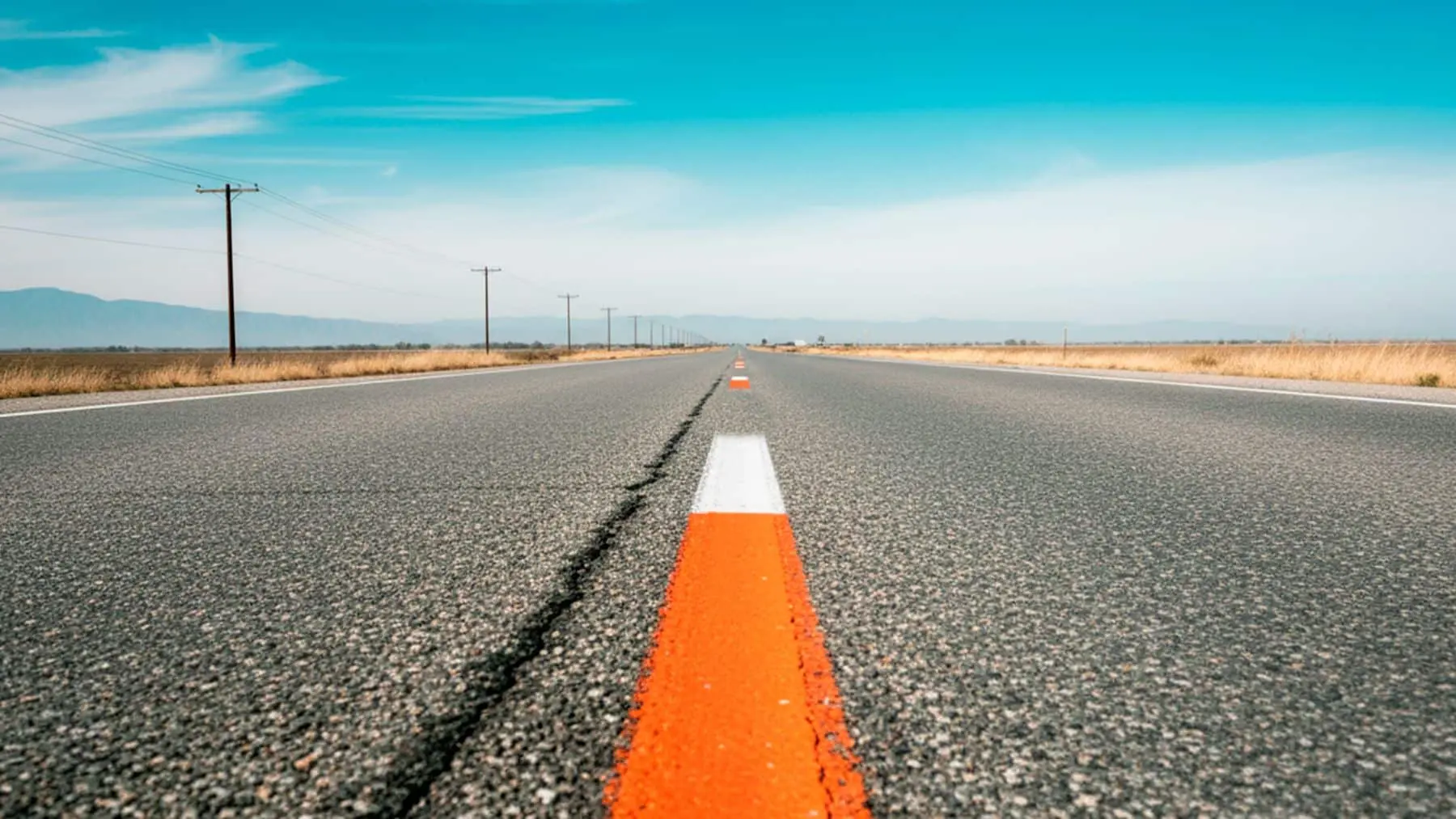
Several state transportation agencies are testing whether orange pavement markings can make those temporary conditions easier for drivers to recognize and follow.
California, Indiana and Washington have each conducted research into orange markings in work zones. Their studies have examined different aspects of the treatment, from driver awareness and visibility to speed, lane keeping and crashes.
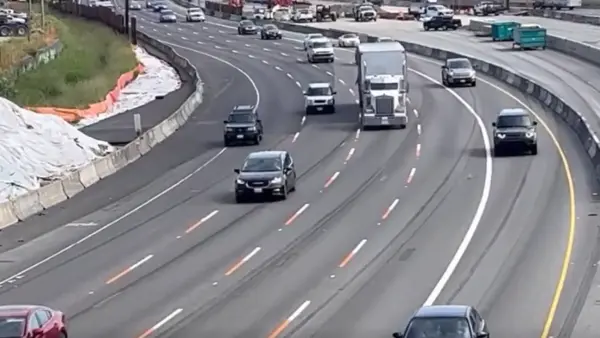
California: Measuring Driver Awareness
Caltrans has conducted an FHWA-approved experiment involving orange-contrast temporary pavement markings in construction zones. Its research examined driver behavior, speeds, vehicle position, collisions, visibility, retroreflectivity and durability.
Driver surveys provided some of the clearest findings.
In Caltrans’ second survey, 78.9% of respondents agreed that orange striping increased their awareness of being in a construction work zone. Nearly 69% agreed that the markings caused them to drive at a more reasonable or safe speed, while about 66% agreed that the treatment made it easier to stay within the lane compared with traditional white lane-line striping.
The results were less conclusive when respondents were asked about other drivers. Only about one-third agreed that other drivers were driving more safely with the orange striping. The survey therefore showed a strong recognition response without establishing that the treatment alone produced a comparable change in overall driver behavior.
Caltrans also documented changes in the markings themselves during the study. Retroreflectivity declined over time for both orange and white markings, while the orange markings experienced changes in color, including a shift toward yellow at night.
For transportation agencies, that makes material performance part of the safety question. The effectiveness of a color-based treatment depends in part on whether the intended contrast remains visible throughout the period it is needed.
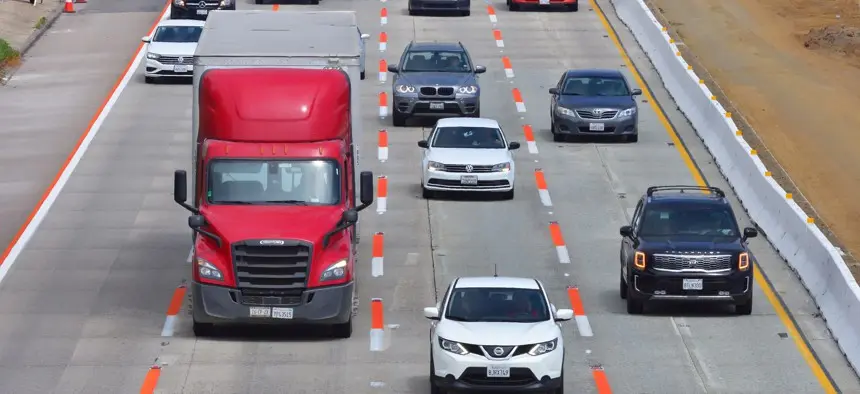
Indiana: Measuring Speed and Lane Departures
Indiana’s research examined whether orange markings produced measurable changes in how drivers traveled through work zones.
A 2023 study conducted through Purdue University’s Joint Transportation Research Program evaluated orange markings for their effects on speed, lane keeping and lane choice, while also evaluating crash-reduction benefits using a Highway Safety Manual approach.
The study reported a 4-mph reduction in work-zone speeds and a 74% reduction in lane-departure crashesassociated with orange markings. Researchers also examined lane centering and vehicle position in work zones.
Those figures are among the strongest findings associated with orange work-zone markings to date, but they come from a specific research evaluation. They should not be interpreted as a universal crash-reduction rate for every work zone using orange striping.
Indiana’s study also examined public acceptance of the treatment, with its driver survey indicating potential for broad acceptance of the new marking color.
The research provides evidence that the treatment can affect more than driver perception. It also suggests a possible relationship between orange markings, speed and lane-departure performance that warrants additional field evaluation.
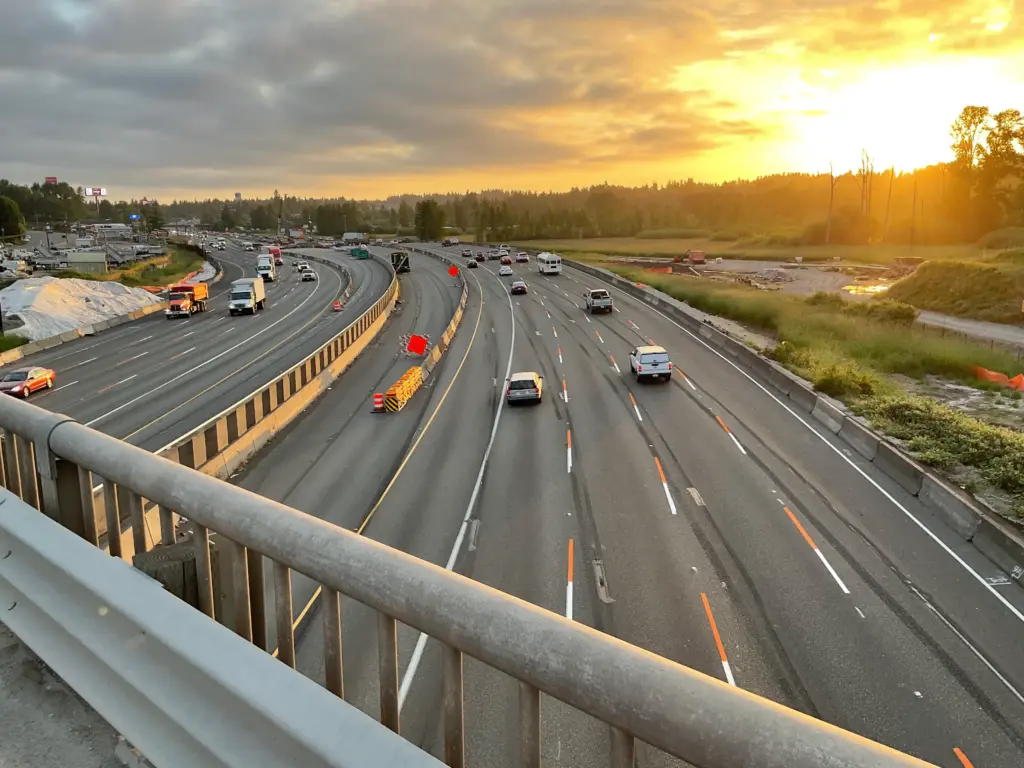
Washington: Testing Orange Markings on I-5
Washington State conducted a six-month study of orange lane striping on a three-quarter-mile section of Interstate 5 in Fife between March and September 2023.
WSDOT collected data on vehicle speeds, lane keeping and collisions, while also measuring the retroreflectivity and durability of the markings. Orange stripes were installed in addition to the traditional white lane lines in the work zone.
WSDOT reported that the Fife work zone experienced fewer collisions and fewer instances of drivers veering over lane lines with the orange striping compared with traditional white striping. Post-striping surveys also found that drivers reported the orange markings helped them see lane lines better and recognize that they were in a construction zone.
The study was completed and WSDOT shared its findings with FHWA in October 2024.
The Washington results provide another field-based data point supporting further investigation of orange pavement markings, particularly their potential effect on lane keeping and collisions.
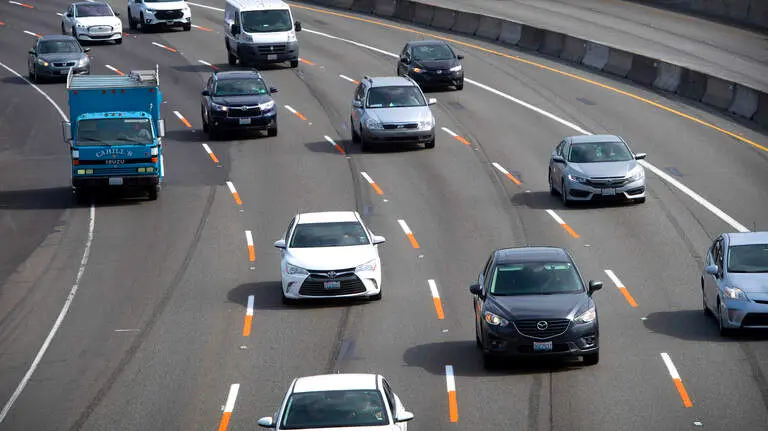
What the Research Shows
The three state studies do not measure exactly the same outcomes, but their findings overlap in several important areas.
California found strong evidence that orange markings increase drivers’ awareness of construction zones. Indiana reported a reduction in work-zone speeds and lane-departure crashes. Washington reported fewer collisions and fewer instances of drivers crossing lane lines, along with improved driver-reported visibility and recognition of the work zone.
The evidence therefore points to several potential benefits, but it does not establish a single expected safety effect for every work zone.
The differences between the studies also matter. California’s research places considerable emphasis on driver awareness and the performance of the markings themselves. Indiana examined speed, lane position and modeled crash reductions. Washington evaluated actual field conditions on I-5, including collisions and lane-line crossings.
Together, they provide multiple lines of evidence rather than one definitive answer.
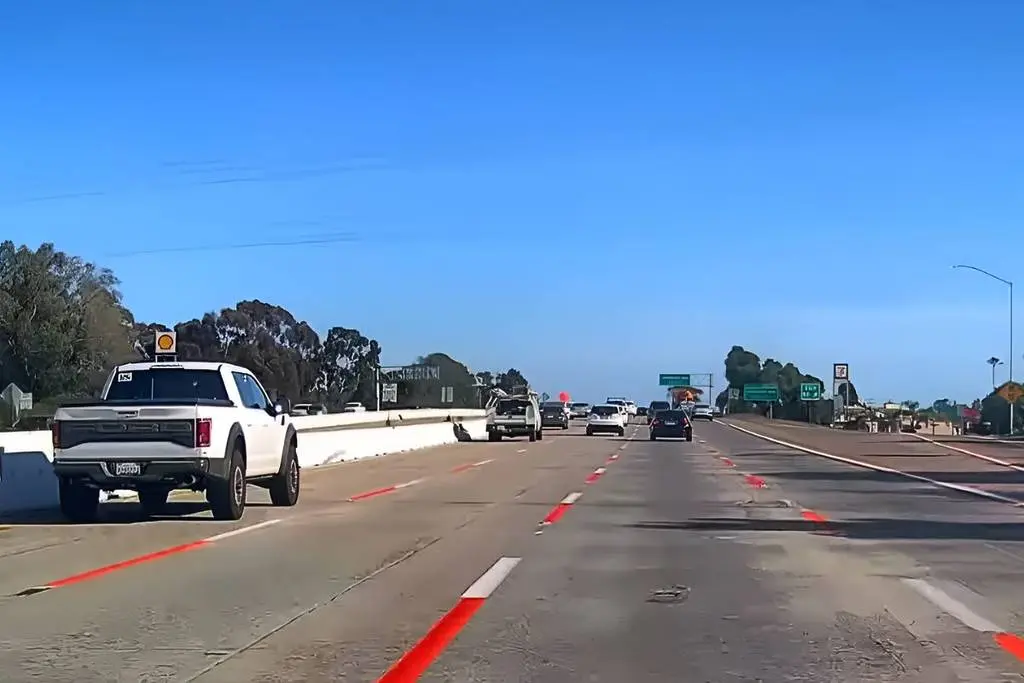
Where Orange Striping Stands Nationally
Orange pavement markings remain an experimental application under the federal traffic-control framework.
FHWA’s MUTCD experimentation process allows highway agencies to test new traffic-control devices or applications that are not included in, or do not comply with, the MUTCD. Experiments are expected to evaluate whether road users understand the treatment, whether it performs as intended and whether it provides measurable safety or operational benefits.
FHWA’s official records list California’s orange-contrast pavement-marking experiment as having a final report received. Separate experiments for temporary orange pavement markings in Indiana and Washington remain listed as active, along with experiments in several other states.
That means the national question remains open. More research is needed to determine how consistently orange markings perform across different roadways, traffic conditions, work-zone configurations and marking materials.
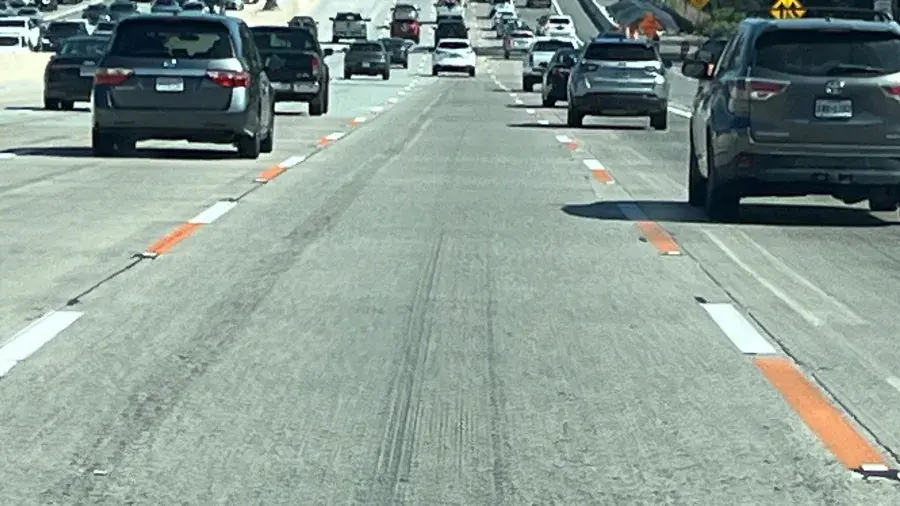
What Comes Next
The research conducted so far provides a stronger case for continued evaluation than it does for a blanket conclusion about orange striping.
Across three states, transportation agencies have documented increased work-zone awareness, changes in driver speed and lane position, and reductions in lane departures or collisions under the conditions studied. At the same time, the research has identified questions involving marking durability, visibility and how results translate across different work-zone environments.
For traffic-control professionals, those questions are likely to determine the next stage of the discussion: where orange markings provide measurable value, what materials and applications perform best, and whether the results seen in individual state experiments can be consistently reproduced elsewhere.
For now, orange striping remains an experimental work-zone treatment—but one supported by enough field research to warrant continued attention from transportation agencies and the contractors working within those environments.
Summary
Orange pavement markings are being tested as a way to make work zones more visible to drivers and reduce lane-departure risks. The approach uses orange striping to distinguish temporary work-zone lane markings from the white and yellow pavement markings drivers normally encounter.
California, Indiana, and Washington have each studied the approach under different conditions. In California, a three-year Caltrans research project examined driver behavior, traffic incidents, visibility, and public perceptions. Surveys found a clear preference for temporary orange markings, while field data showed slightly reduced vehicle speeds during one stage and no negative effect on lane keeping. The study also documented fading and declining retroreflectivity over time, highlighting durability and nighttime visibility as factors that require attention.
Research conducted through Indiana’s Joint Transportation Research Program evaluated orange markings using crash analysis, driver behavior, and lane-position measures. The study reported a 4-mph reduction in speeds and a 74% reduction in lane-departure crashes under the conditions evaluated. These findings provide evidence of a potential safety benefit but represent results from a specific research setting rather than a universal effect.
Washington’s six-month study on I-5 in Fife similarly found fewer collisions and fewer instances of vehicles crossing lane lines after orange striping was introduced. Driver surveys indicated that the orange markings made lane lines easier to see and helped communicate that drivers were entering a construction zone.
Together, these studies suggest that orange pavement markings may improve work-zone recognition and lane discipline, while questions remain about durability, visibility, application, and how consistently the results transfer to different roadways and traffic conditions.
Works Cited
BGR. “California’s Orange Highway Stripes Are Already Changing How You Drive.” Yahoo News, 15 Feb. 2026.
Source: Yahoo News article
Linke, Barbara, et al. Orange Contrasted Temporary Pavement Delineation in Construction Zones. California Department of Transportation, 4 Apr. 2025. AHMCT Research Center, University of California, Davis.
Source: Caltrans research report
United States, Federal Highway Administration. “MUTCD Official Rulings.” Manual on Uniform Traffic Control Devices, U.S. Department of Transportation.
Source: FHWA MUTCD Official Rulings
United States, Federal Highway Administration. Manual on Uniform Traffic Control Devices for Streets and Highways. 11th ed., U.S. Department of Transportation, 2023.
Source: MUTCD 11th Edition
Williamson, Michael, and Ping Lin. Effectiveness of Contrast Markings on Roadways and Orange Markings in Work Zones. Joint Transportation Research Program, Purdue University, 2023, FHWA/IN/JTRP-2023/27. doi:10.5703/1288284317683.
Source: Purdue Joint Transportation Research Program study
Washington State Department of Transportation. “Orange Lane Striping Study.” WSDOT, 2024.
Source: WSDOT Orange Lane Striping Study