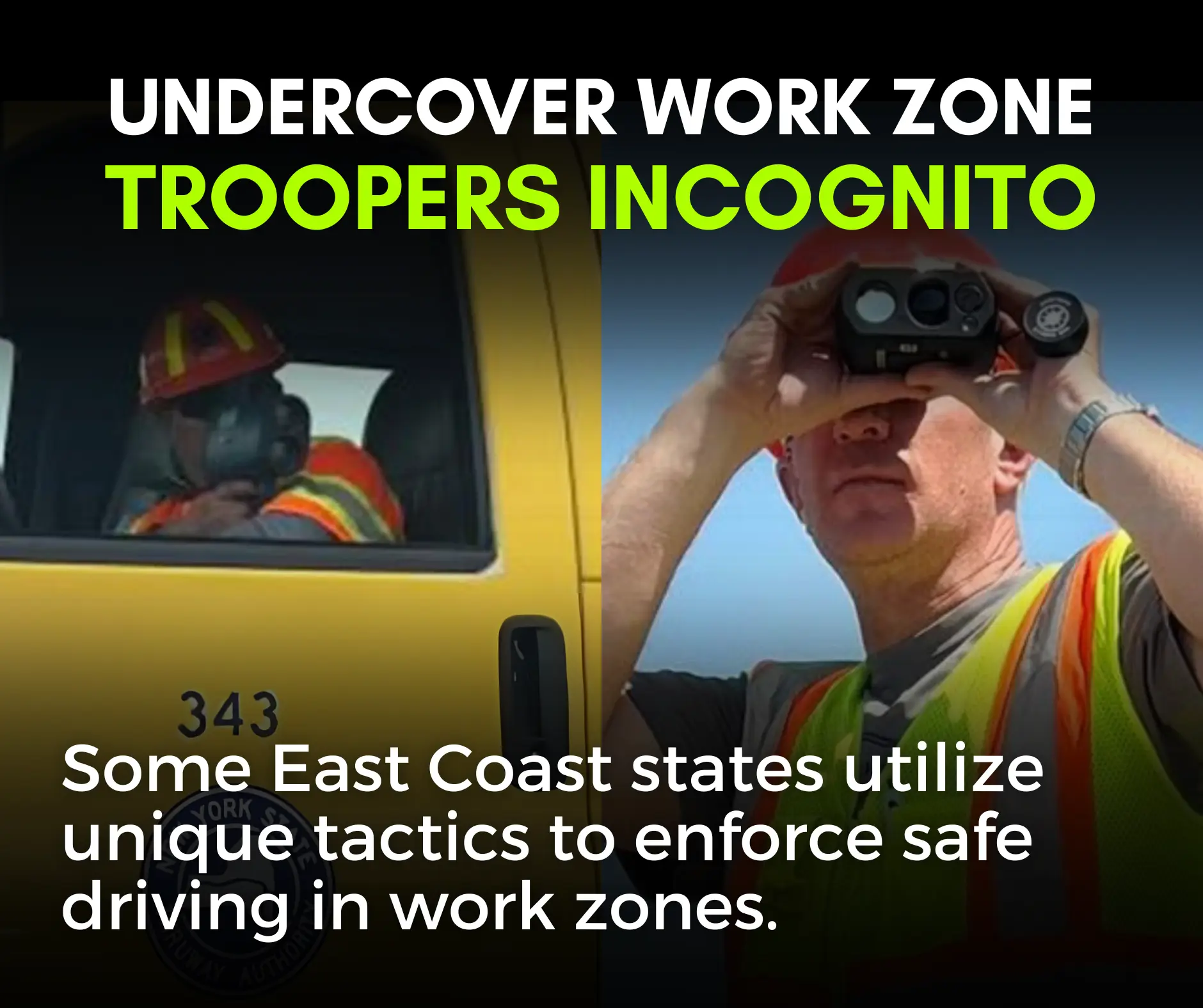
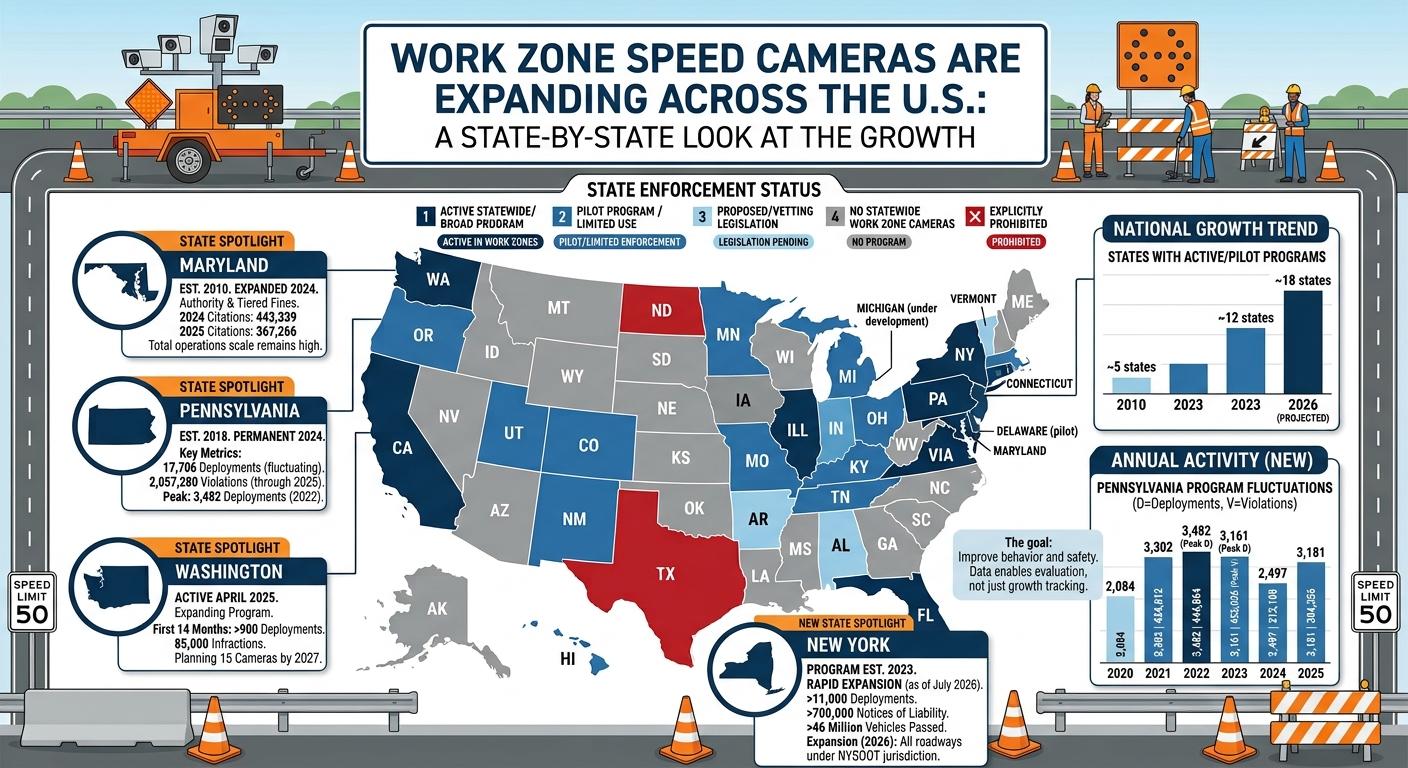
Automated work-zone speed enforcement is expanding across the United States, but the growth is not occurring uniformly.
Some states have operated programs for more than a decade. Others have moved from pilot programs to permanent enforcement. Several more have only recently authorized automated enforcement or begun the process of putting new programs into operation.
The clearest indication of the trend comes from the states already collecting data.
Pennsylvania has recorded 17,706 deployments and more than 2.05 million violations since its program’s data period began in 2020. New York has surpassed 11,000 deployments, 700,000 Notices of Liability and 46 million vehicles passing through enforcement deployments since launching its program in 2023. Washington exceeded 900 deployments at approximately 50 job sites during its first 14 months of operation. Connecticut recorded more than 8.4 million vehicles during testing before beginning its enforcement program in 2026.
Those numbers show that the growth is no longer measured simply by whether states are experimenting with the technology. In several states, automated enforcement is already generating millions of observations, hundreds of thousands of violations and thousands of individual deployments.
The state-by-state picture shows how that expansion is developing.
Maryland: An Established Program Still Producing Hundreds of Thousands of Citations
Program status: Established and expanded
Recent development: Expanded enforcement authority and tiered fines
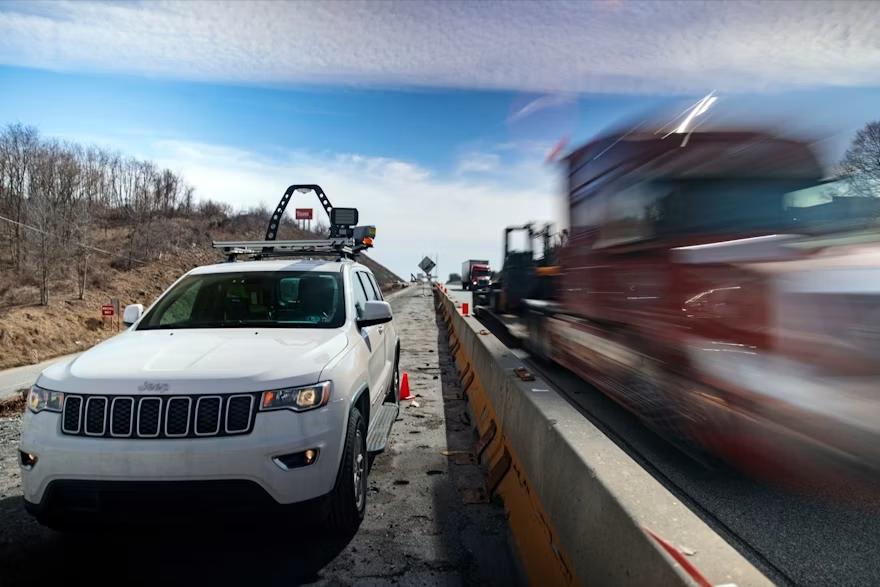
Maryland is one of the country’s longest-running users of automated work-zone speed enforcement.
The state’s program has now reached a scale that provides substantial year-to-year data. In 2024, Maryland’s automated enforcement system issued 443,339 citations. In 2025, it issued 367,266, a decline of approximately 17 percent.
The decline occurred after Maryland changed its enforcement structure.
The Maryland Road Worker Protection Act of 2024 expanded the state’s automated speed-enforcement program to allow more work zones to deploy cameras and established a tiered fine system based on how far above the posted speed limit a vehicle was traveling. The new tiered structure took effect January 1, 2025.
The program produced more than 48,000 citations during its first two months under the new tiered structure.
The subsequent decline to 367,266 citations in 2025 is an important data point, but it should not automatically be characterized as proof that cameras caused drivers to slow down.
MDOT says the lower citation total may reflect increased awareness and the new fine structure helping change driver behavior, but explicitly describes that as a possibility rather than a definitive finding.
For the purposes of tracking growth, the more concrete development is the expansion of the program’s authority and the scale at which Maryland continues to operate it.
Illinois: More Than 15 Years of Continuous Program Operation
Program status: Established
Program history: More than 15 years
Current development: Program renewed through 2029
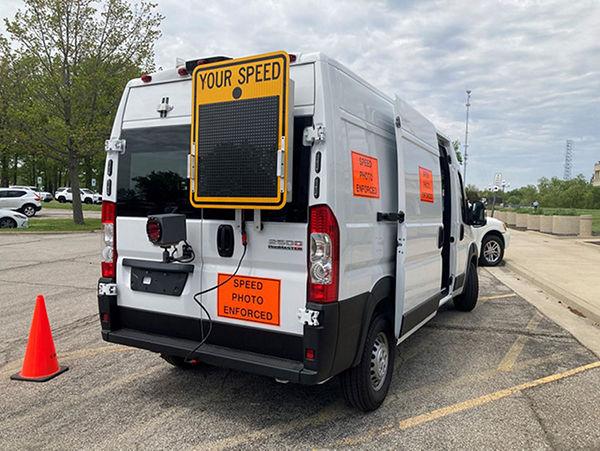
Illinois represents a different form of growth: continued operation rather than a recent launch.
FHWA identified Illinois and Maryland as states that had operated work-zone speed safety camera programs for more than 15 years as of 2024.
Illinois’ program remains active.
In April 2026, the Illinois Department of Transportation issued a renewal notice extending its turnkey digital photo speed-enforcement program for construction and maintenance work zones from June 1, 2026, through May 31, 2029. The program operates in conjunction with the Illinois State Police.
That does not establish a particular increase in camera deployments or citations, so this article does not characterize Illinois as having experienced a quantified increase.
What the state does demonstrate is that automated work-zone enforcement has moved beyond the pilot stage in at least some states and has remained an operational program over an extended period.
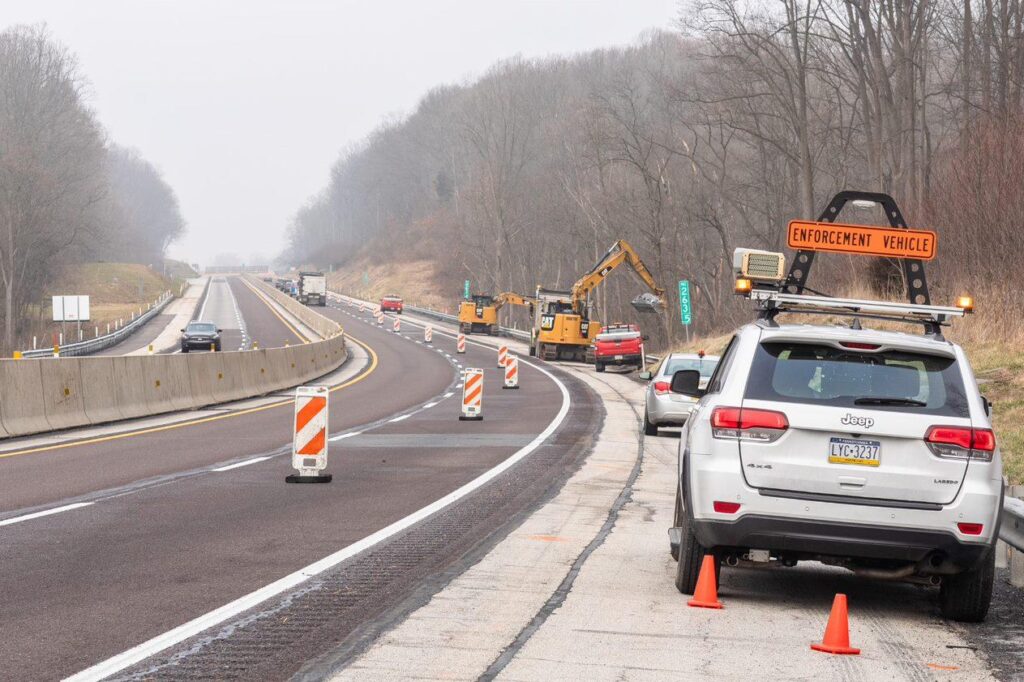
Pennsylvania: 17,706 Deployments and More Than 2 Million Violations
Program status: Permanent
Pilot began: 2018
Permanent program: 2024
Pennsylvania provides the most detailed long-term deployment data among the states examined here.
The state’s Automated Work Zone Speed Safety Camera program began as a five-year pilot in 2018. Legislation subsequently made the program permanent.
PennDOT’s 2026 annual report records 17,706 deployments and 2,057,280 violations across the program’s reporting period through 2025.
The report also shows substantial annual activity:
Year | Deployments | Violations |
2020 | 2,084 | 219,214 |
2021 | 3,302 | 424,812 |
2022 | 3,482 | 444,864 |
2023 | 3,161 | 452,026 |
2024 | 2,497 | 212,108 |
2025 | 3,181 | 304,256 |
Total | 17,706 | 2,057,280 |
The data show that deployment volume has fluctuated rather than increasing every year. Deployments peaked at 3,482 in 2022, declined to 2,497 in 2024 and increased to 3,181 in 2025.
That is an important distinction.
The evidence supports describing Pennsylvania’s program as large and permanently established, but it does not support claiming that deployments have increased continuously year after year.
The same caution applies to violations. Pennsylvania issued more than 450,000 violations in 2023, fewer than 215,000 in 2024 and more than 304,000 in 2025.
The significant growth story is therefore the scale and institutionalization of the program, rather than a simple upward line in annual citations.
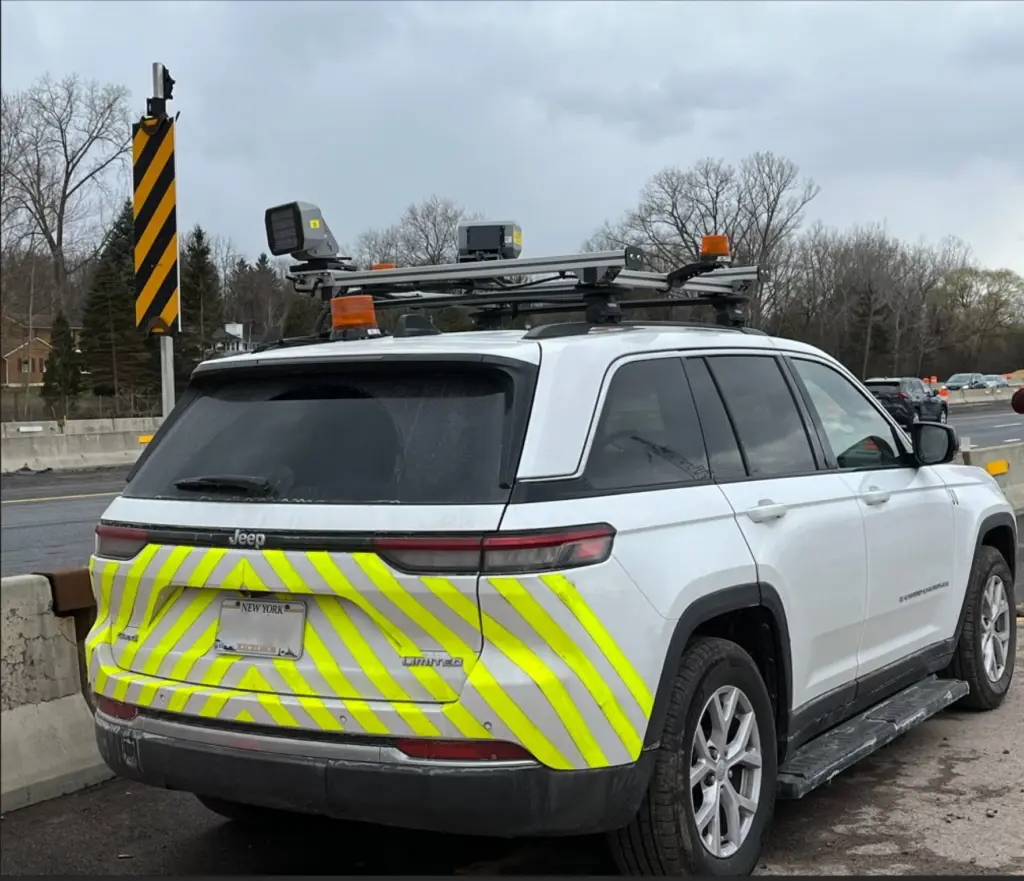
New York: More Than 11,000 Deployments and 46 Million Vehicles
Program status: Expanding
Program began: 2023
Major expansion: 2026
New York provides one of the clearest examples of rapid expansion.
NYSDOT’s Automated Work Zone Speed Enforcement program began in 2023. As of July 2026, the agency reported:
- More than 11,000 deployments
- More than 700,000 Notices of Liability
- More than 46 million vehicles passing through deployments
Those figures represent a substantial amount of enforcement activity in a program that has been operating for only several years.
New York also expanded the geographic scope of the program in 2026.
Under provisions adopted in the state’s FY 2027 budget, NYSDOT can now deploy automated work-zone speed enforcement on work zones located on all roadways under NYSDOT’s jurisdiction, rather than being restricted to controlled-access highways.
That expansion is significant because it changes the potential pool of projects where automated enforcement can be used.
NYSDOT also reported that its program had already demonstrated a 30 percent reduction in speeds in work zones with a speed camera, according to the agency.
That figure should be attributed to NYSDOT rather than presented as a general national finding.
For the broader industry, however, the more straightforward growth indicators are the 11,000-plus deployments and 46 million vehicles recorded, combined with the state’s 2026 expansion of eligible roadways.
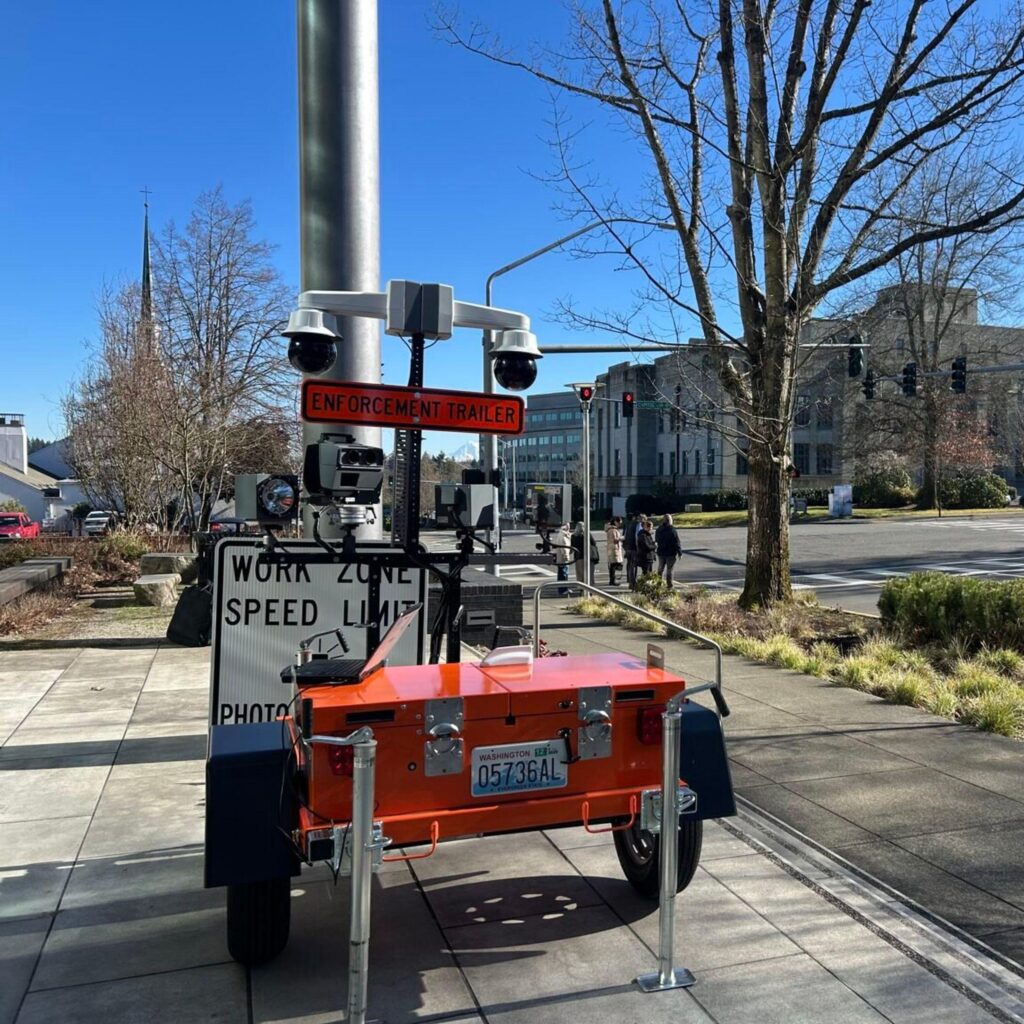
Washington: More Than 900 Deployments in the First 14 Months
Program status: Expanding
Program began: April 2025
Washington’s program illustrates how quickly a newer program can accumulate deployment activity.
The Washington State Department of Transportation began its Work Zone Speed Camera Program in April 2025.
By June 24, 2026, WSDOT reported that cameras had been used more than 900 times at approximately 50 job sites and that approximately 85,000 work-zone speed-camera infractions had been issued statewide.
WSDOT also reported that the program had expanded into eastern Washington and that up to 15 cameras were planned to be in operation by 2027.
The program’s growth therefore can be measured in several ways: more deployments, more job sites, additional geographic coverage and an increase in the planned number of cameras.
Washington has also changed its penalty structure as the program has matured. Beginning July 1, 2026, the first work-zone speed-camera infraction changed from a $0 penalty to a $125 fine. Second and subsequent infractions remain $248.
WSDOT says early research indicates that ongoing camera use reduces speeds, but the agency’s published material does not establish a specific statewide crash-reduction figure.
That distinction matters when evaluating what the program’s early data actually demonstrate.
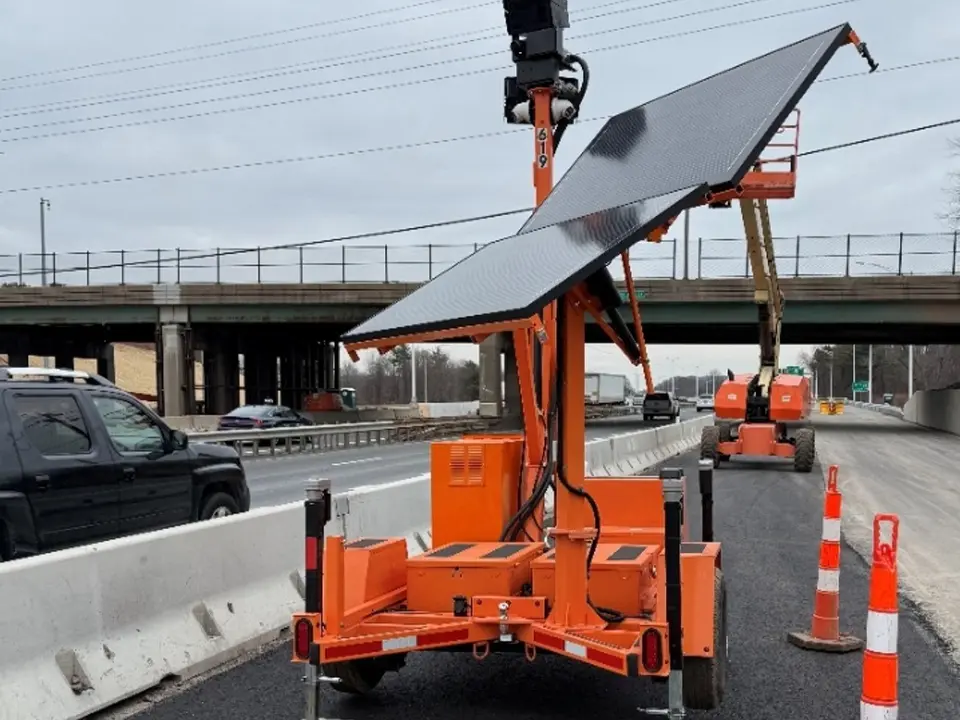
Connecticut: 8.4 Million Vehicles Recorded Before Full Enforcement
Program status: Newly operational
Testing began: 2025
Enforcement began: June 2026
Connecticut represents one of the newest entries into automated work-zone speed enforcement.
CTDOT began testing its Know the Zone automated work-zone speed-control system in 2025. During testing from March through May 2026, cameras detected more than 8.4 million vehicles across multiple work zones. Approximately 1.36 million vehicles were traveling above the posted work-zone speed limit. More than 4,000 vehicles were detected traveling above 85 mph, including more than 150 traveling above 100 mph.
Full operations began June 1, 2026, initially at three active projects:
- I-95 Interchange 43 in West Haven
- I-95 Interchange 74 in East Lyme
- Route 2 in Colchester
CTDOT said additional cameras would be deployed at work zones identified for improved safety enforcement.
Connecticut’s early numbers are notable because they demonstrate how quickly a new program can generate a large volume of traffic observations before the enforcement program is fully operational.
However, those 8.4 million vehicle detections should not be described as violations or citations. They represent vehicles detected during the testing period.
That distinction illustrates why state-by-state comparisons need to consider what each agency is actually counting.
Indiana: From Legislation to an Active Pilot
Program status: Pilot
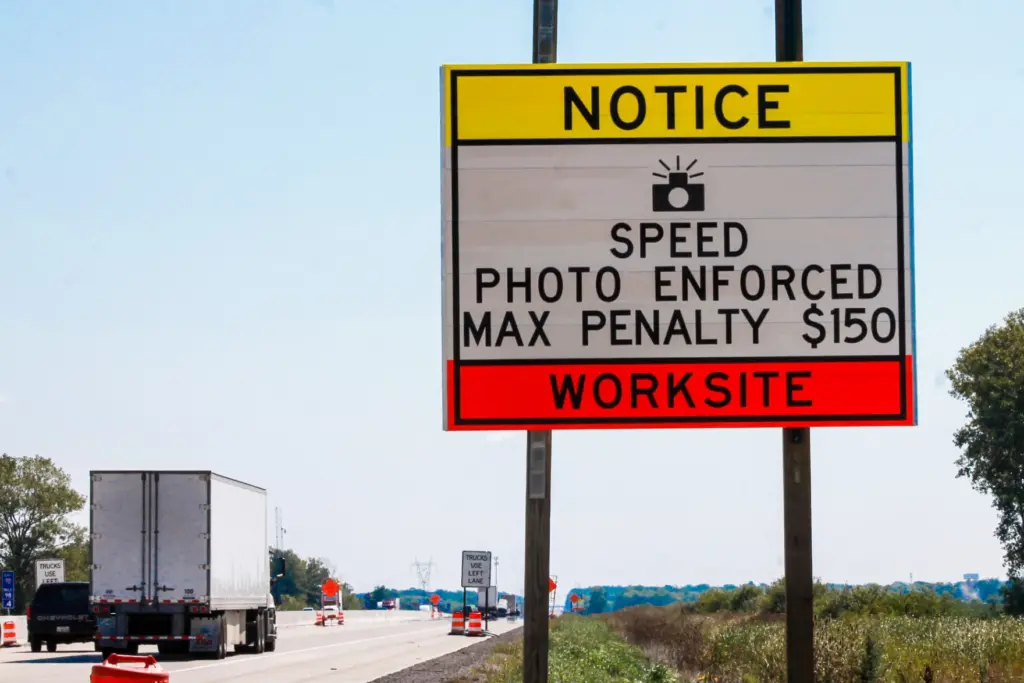
Indiana’s Safe Zones program represents another stage in the expansion of automated work-zone enforcement: moving from legislation into operational testing.
INDOT’s pilot program permits the use of four automated systems to monitor speeds in work zones. The systems use technologies including LiDAR and radar, while cameras document vehicles traveling at least 11 mph above the posted speed limit. Workers must be present for violations to be valid.
Indiana’s program is therefore not directly comparable with Pennsylvania’s long-running deployment totals or New York’s millions of vehicle observations.
The state does, however, demonstrate that automated work-zone enforcement has moved into another major state transportation system through a formal pilot framework.
INDOT is also conducting research into automated speed enforcement and other speed-compliance measures to evaluate their effects on vehicle speeds and driver behavior in work zones.
Arkansas: Cameras Added to Interstate Work Zones
Program status: Authorized and operational
Authorization: 2023
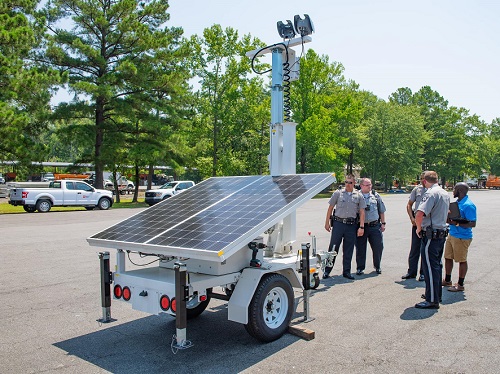
Arkansas entered the automated work-zone enforcement landscape in 2023 when legislation authorized speed-enforcement cameras in interstate work zones.
The Arkansas Department of Transportation announced in July 2023 that speed-enforcement cameras were now legal in Arkansas interstate work zones.
Arkansas’ model is different from some of the other programs discussed here.
According to ARDOT, an officer can be positioned at the end of a work zone and use the camera system to observe violations occurring within the work zone.
That means Arkansas should not be presented as using an identical enforcement model to states where automated systems generate notices without an officer positioned to conduct enforcement.
The state nevertheless adds another example of automated camera technology moving from legislative authorization into actual work-zone enforcement.
Virginia: An Active Work-Zone Speed Camera Program
Program status: Active
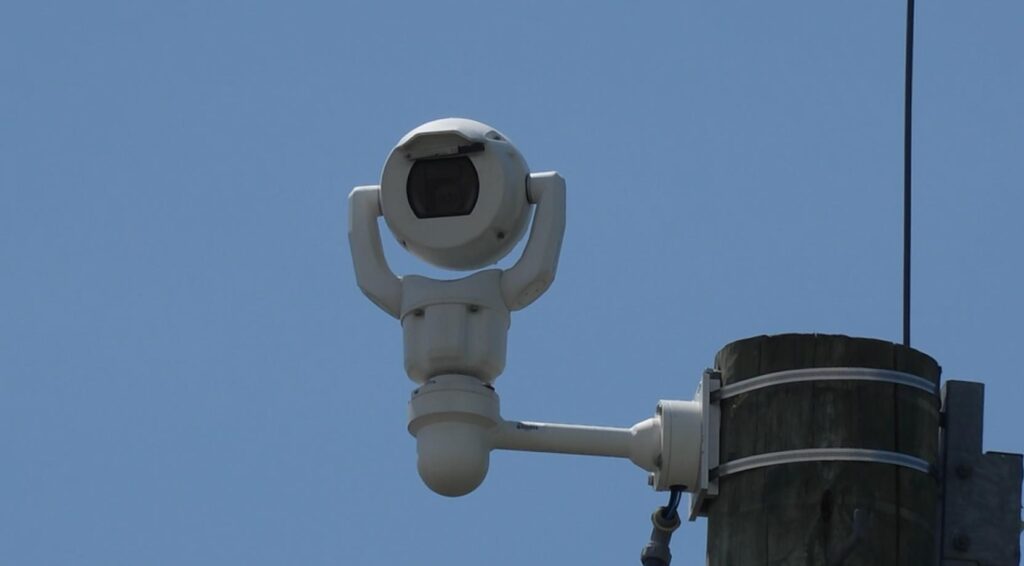
Virginia State Police currently operates a Work Zone Speed Safety Camera Program, with speed cameras active in Virginia highway work zones. The agency’s current program information identifies a maximum fine of $100.
Virginia’s inclusion is important primarily as another example of an established state program rather than as evidence of a particular deployment increase.
The available official material reviewed for this article does not provide a sufficiently comparable year-over-year deployment series to claim a specific growth rate for Virginia.
That limitation is worth acknowledging rather than filling the gap with estimates or secondary reporting.
Alabama: Moving Toward Its First Pilot
Program status: Pilot procurement
2026 development: First interstate construction-project pilot
Alabama is an example of a state that is still at the beginning of the implementation process.
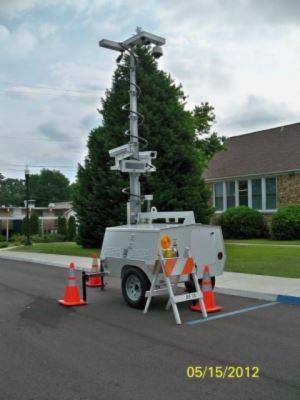
In June 2026, the Alabama Department of Transportation issued a request for proposals seeking a contractor to implement automated speed-enforcement devices at one interstate construction project as a pilot authorized by Act 2026-475. The procurement period ran from June 29 through July 20, 2026.
Alabama therefore should not be counted alongside Pennsylvania, New York or Washington as a mature operational program.
Its significance is that the state has progressed from legislative authorization to an actual procurement for a work-zone pilot.
The next measurable stage will be deployment data.
What the State-by-State Data Actually Shows
The states do not produce a perfectly uniform dataset.
Some report deployments. Others report citations or violations. Some report the number of vehicles passing through enforcement areas. Others publish information about camera capacity or program authority.
Those differences make a single national growth figure difficult to establish from the available state data.
They do not, however, obscure the broader trend.
Pennsylvania has accumulated 17,706 deployments and more than 2 million violations. New York has surpassed 11,000 deployments and 46 million vehicles passing through enforcement deployments. Washington has exceeded 900 deployments at approximately 50 job sites in its first year-plus. Maryland continues to issue hundreds of thousands of citations annually. Connecticut recorded more than 8.4 million vehicles during testing alone before launching its enforcement program.
At the same time, Illinois continues its long-running program through 2029, Indiana operates a formal pilot, Arkansas has an established enforcement framework, Virginia has an active program and Alabama is moving into its first pilot.
The growth therefore appears in several different forms:
More deployments. Pennsylvania and New York have accumulated thousands of deployments, while Washington passed 900 deployments in a little over a year.
More vehicles being measured. New York has recorded more than 46 million vehicles through deployments, while Connecticut recorded more than 8.4 million during testing.
More geographic authority. New York’s 2026 legislation expanded the roadways where NYSDOT can deploy the technology.
More permanent programs. Pennsylvania moved from a pilot to a permanent program, while Illinois continues its program under a renewed contract through 2029.
More states moving into implementation. Connecticut began enforcement in 2026, and Alabama moved into procurement for its first interstate pilot.
Why Deployment Counts Matter More Than Camera Counts
One of the most important distinctions in the available data is the difference between the number of cameras and the number of deployments.
A camera does not necessarily remain at one work zone.
Washington, for example, rotates cameras between work zones. WSDOT reported more than 900 uses at approximately 50 job sites even though the agency’s planned equipment inventory is much smaller than that deployment total.
This means a relatively small number of mobile units can generate a large number of work-zone deployments.
For traffic-control professionals, deployment activity may therefore be a more useful measure of how deeply automated enforcement is being integrated into actual work zones than simply counting the number of camera units an agency owns.
New York’s more than 11,000 deployments and Pennsylvania’s 17,706 deployments demonstrate the scale that can result when mobile enforcement equipment is repeatedly deployed across construction and maintenance projects.

What the Growth Means for Traffic-Control Operations
The expansion of automated enforcement also creates an increasingly direct intersection between enforcement technology and temporary traffic control.
As deployments increase, agencies and contractors have to account for where enforcement equipment is placed, how it is deployed and how its location changes as work-zone configurations change.
The available state programs demonstrate several different operating models.
Washington uses mobile cameras that circulate among active work zones.
New York’s program has accumulated thousands of deployments across state transportation facilities.
Arkansas uses camera technology to allow an officer to observe violations within the work zone while positioned elsewhere.
Indiana requires workers to be present for Safe Zones violations to be valid.
These differences mean automated enforcement is not one standardized piece of equipment or one standardized operating procedure.
It is becoming another category of technology that has to be integrated into the specific requirements of individual work zones and state programs.
The Next Measure of Growth Will Be What the Data Shows
The expansion of automated work-zone speed enforcement is now generating enough state-level data to support more detailed evaluation.
FHWA has developed specific guidance for evaluating work-zone speed safety camera programs and published case studies examining programs in Pennsylvania and New York.
That evaluation work is important because deployment growth alone does not establish that the technology is reducing crashes or saving lives.
The data currently demonstrate something narrower but still significant: transportation agencies are deploying the technology at increasingly large scales and continuing to expand, renew or establish programs.
The next question is how effectively those deployments change driver behavior and improve safety under different work-zone conditions.
For the traffic-control industry, that may ultimately be the most important development.
The question is no longer simply whether automated speed enforcement can be used in a work zone.
In several states, it already is—at a scale measured in thousands of deployments, millions of vehicles and millions of recorded violations or observations.
The next phase will be determining where those deployments provide the greatest measurable safety benefit, how they should be integrated into work-zone operations and whether additional states follow the same path.
The growth is measurable. The national picture is becoming larger. And the data being generated by these programs will increasingly determine what happens next.
Summary
Automated work-zone speed enforcement is expanding across the United States, with growth occurring through new programs, expanded authority and increasingly large deployment volumes. The scale varies by state, but several programs now generate thousands of deployments and millions of vehicle observations or violations.
Pennsylvania has recorded 17,706 deployments and more than 2 million violations since its program began, while New York has surpassed 11,000 deployments, 700,000 Notices of Liability and 46 million vehicles passing through enforcement deployments. Washington exceeded 900 deployments at approximately 50 job sites during its first year-plus, while Connecticut recorded more than 8.4 million vehicles during testing before launching enforcement in 2026.
Maryland, one of the country’s longest-running programs, issued more than 367,000 citations in 2025. Illinois has operated its program for more than 15 years and recently renewed it through 2029. Meanwhile, Indiana is operating a pilot program, Arkansas has an established enforcement framework, Virginia has an active program, and Alabama is moving toward its first interstate pilot.
The data do not show a uniform year-over-year increase in deployments or citations in every state. Instead, growth is occurring in several forms: increased deployment activity, expanded geographic authority, permanent programs replacing pilots, and additional states moving from legislation or testing toward active enforcement.
For the traffic-control industry, the trend represents an increasingly significant integration of automated enforcement into work-zone operations. With state programs producing millions of observations and violations, the technology is becoming an established component of the nation’s work-zone safety strategy.
Works Cited
Arkansas Department of Transportation. “Speed Enforcement Cameras Now Legal in Arkansas Interstate Work Zones.” Arkansas Department of Transportation, 28 July 2023,
URL: https://ardot.gov/news/nr-23-252/.
Arkansas Department of Transportation. “Slow Down, Phone Down.” Arkansas Department of Transportation,
URL: https://ardot.gov/slowdownphonedown/.
Connecticut Department of Transportation. “CTDOT to Activate Work Zone Speed Cameras on June 1.” Connecticut Department of Transportation, 29 May 2026,
URL: https://portal.ct.gov/dot/ctdot-press-releases/2026/ctdot-to-activate-work-zone-speed-cameras-on-june-1.
Federal Highway Administration. “Case Study of New York State’s Work Zone Speed Safety Camera Program.” U.S. Department of Transportation, Jan. 2025. Federal Highway Administration, Office of Operations,
URL: https://ops.fhwa.dot.gov/publications/fhwahop24083/fhwahop24083.pdf.
Federal Highway Administration. “Case Study of Pennsylvania’s Work Zone Speed Safety Camera Program.” U.S. Department of Transportation, Jan. 2025. Federal Highway Administration, Office of Operations,
URL: https://ops.fhwa.dot.gov/publications/fhwahop24071/fhwahop24071.pdf.
Federal Highway Administration. “Speed Safety Cameras—A Proven Countermeasure to Improve Work Zone Safety.” Safety Compass, vol. 18, no. 2, U.S. Department of Transportation, 2024,
URL: https://highways.dot.gov/sites/fhwa.dot.gov/files/docs/newsletters/sc_vol18_is2/index.htm.
Federal Highway Administration. “Work Zone Speed Management.” Federal Highway Administration, Office of Operations, U.S. Department of Transportation,
URL: https://ops.fhwa.dot.gov/wz/traffic_mgmt/wzsm.htm.
Illinois Department of Transportation. “Renewal Notice: Automated Speed Enforcement System in Highways Construction.” Illinois BidBuy, 23 Apr. 2026,
URL: https://www.bidbuy.illinois.gov/bso/external/bidDetail.sdo?docId=26-494DOT-FINAD-B-52029&external=true&parentUrl=close.
Indiana Department of Transportation. “Indiana Safe Zones.” Indiana Department of Transportation,
URL: https://www.in.gov/indot/safety/safe-zones/.
Indiana Department of Transportation. “Emerging Mobility Research.” Indiana Department of Transportation,
URL: https://www.in.gov/indot/emerging-mobility/emerging-mobility-research/.
Maryland Department of Transportation. “Lt. Gov. Miller Urges Renewed Commitment to Protect Highway Crews During Observance of National Work Zone Awareness Week.” Maryland Department of Transportation, 2026,
URL: https://mdot.maryland.gov/tso/pages/newsroomdetails.aspx?PageId=38&newsId=1071.
Maryland State Highway Administration. “Work Zone Safety.” Maryland State Highway Administration,
URL: https://www.roads.maryland.gov/mdotsha/pages/Index.aspx?PageId=19.
New York State Department of Transportation. “State Department of Transportation Announces Major Enhancement of Highway Safety with Expansion of Automated Work Zone Speed Enforcement Program to Protect Highway Workers.” New York State Department of Transportation, 20 July 2026,
URL: https://www.dot.ny.gov/news/press-releases/2026/2026-07-202.
Pennsylvania Department of Transportation. 2026 WZSSC Annual Report. Pennsylvania Work Zone Speed Safety Cameras, 2026,
URL: https://workzonecameras.penndot.gov/wp-content/uploads/2026/05/2026-WZSSC-Annual-Report_04.02.2026.pdf.
U.S. Department of Transportation, Intelligent Transportation Systems Joint Program Office. “Automated Work Zone Enforcement in Pennsylvania Reduced Speeding by 10.7 Percentage Points and Excessive Speeding by 2.3 Percentage Points.” ITS Knowledge Resources, 24 Apr. 2026,
URL: https://www.itskrs.its.dot.gov/2026-b02045.
Virginia State Police. “Work Zone Speed Safety Camera Program.” Virginia State Police,
URL: https://vsp.virginia.gov/work-zone-speed-cameras/.
Washington State Department of Transportation. “Speed Camera Fines to Increase in Work Zones Beginning July 1.” Washington State Department of Transportation, 24 June 2026,
URL: https://wsdot.wa.gov/about/news/2026/speed-camera-fines-increase-work-zones-beginning-july-1.
Washington State Department of Transportation. “Speed Cameras Bring Added Safety to Work Zones, Program Prepares for Expansion.” Washington State Department of Transportation, 16 Apr. 2026,
URL: https://wsdot.wa.gov/about/news/2026/speed-cameras-bring-added-safety-work-zones-program-prepares-expansion.