Wearable Safety Lighting in Work Zones
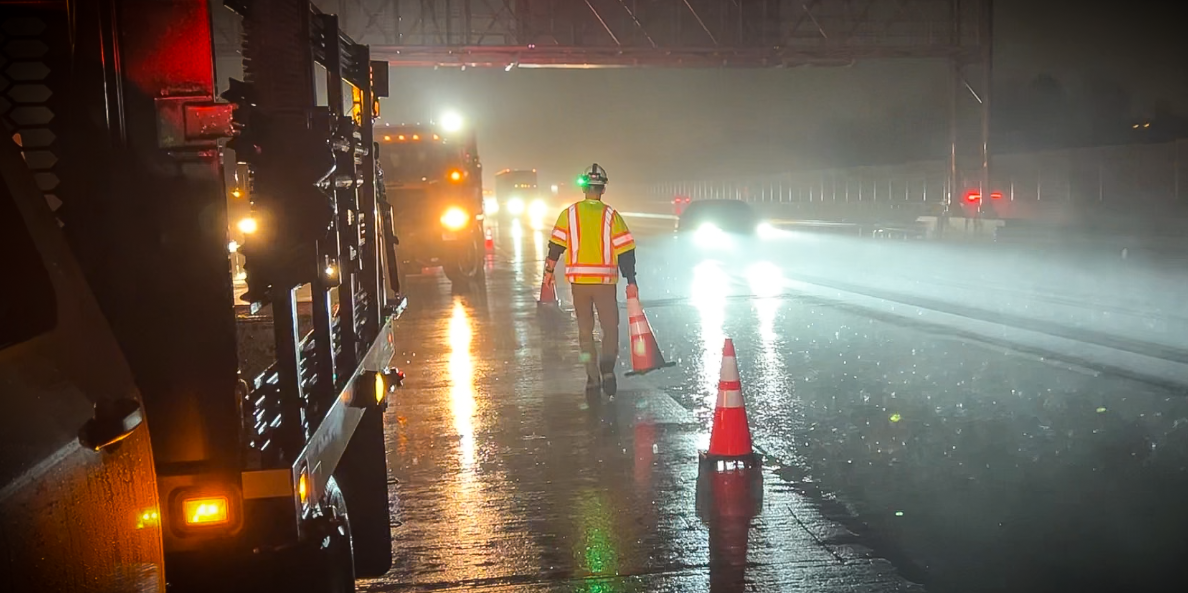
For contractors and traffic control professionals, reactions to wearable lighting in work zones tend to fall somewhere between cautious optimism and pragmatic curiosity. Experienced professionals recognize that crews often step outside the brightest shadow of light towers or area lighting—especially during mobile operations or intermittent tasks—so any tool that improves personal visibility is worth evaluating. INDOT’s Greenlight rollout, from that standpoint, feels familiar: it’s an additional visibility layer, not a wholesale safety system replacement.
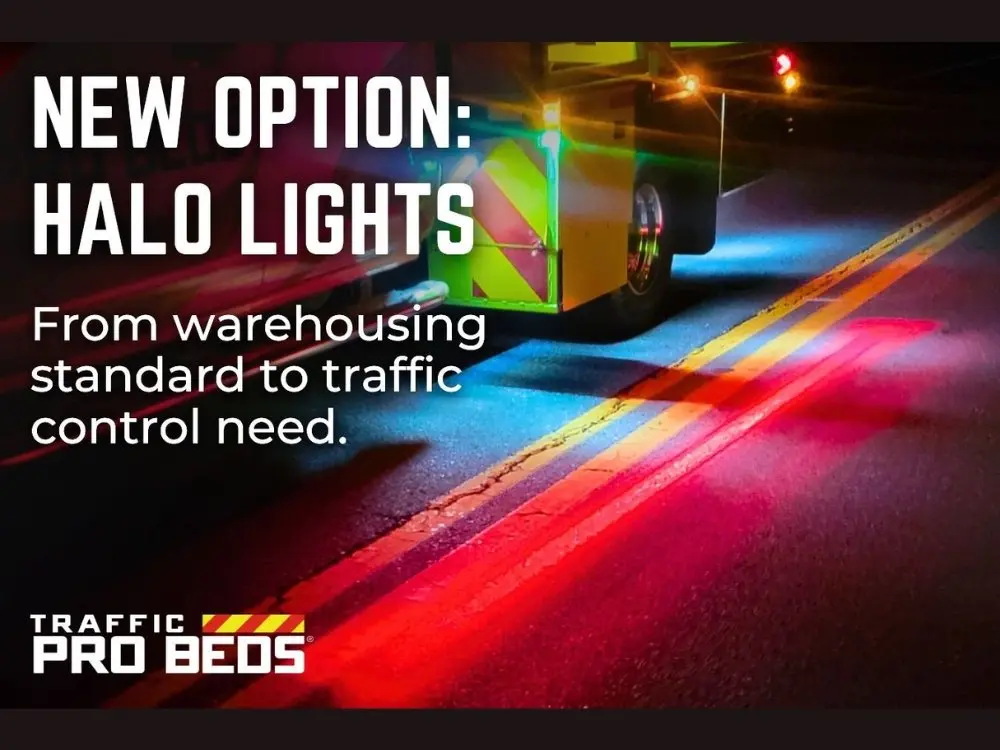
The conversation among industry insiders often turns to how other agencies have experimented with or adopted similar technologies, and what lessons might be gleaned before fully embracing wearable systems as a mainstream standard. In Ohio, for example, the Department of Transportation deployed Halo Lights among its workforce, with more than 150 devices in use among crews. An ODOT safety consultant noted that one of the biggest concerns for workers was not being able to see hazards or being struck by motorists, and the Halo Lights helped by increasing both workers’ ability to see hazards and motorists’ ability to detect them.
California and Pennsylvania DOTs have also experimented with personal lighting systems over multiple years. A Caltrans study found that combining wearable lights with high-visibility garments helped highlight workers and equipment while still relying on overall area lighting standards. Broader research from the National Work Zone Safety Information Clearinghouse indicates that wearable lighting could increase visibility for roles like dump operators, spotters, and density technicians, particularly in low-light conditions, although formal standards for implementation remain limited.
Other states have taken a more conservative approach. Minnesota DOT’s vehicle lighting specifications continue to emphasize amber lighting on equipment and do not currently authorize alternative personal lighting systems on construction operations, meaning wearables like green LED beacons are not part of formal compliance. Texas DOT focuses on public outreach and adequate area lighting standards, with researchers at the Texas A&M Transportation Institute developing nighttime work-zone lighting guidelines, but without endorsing specific wearable devices. Across agencies, the consistent theme is that wearable lighting shows promise as a visibility booster, but it is generally viewed as a supplement to well-designed, compliant work-zone lighting rather than a stand-alone solution.
Contractors who have tested similar wearable lighting systems in real work zones often echo that sentiment. One traffic control supervisor observed that the psychological benefit of being seen by drivers cannot be understated, even if quantifying incident reductions remains challenging. Worker confidence and situational awareness are subtle but real operational advantages, particularly in mobile or linear work zones where lighting coverage is never perfect. At the same time, other professionals point out that in complex urban work zones with multiple overlapping warning systems, drivers’ visual attention may still be dominated by arrow boards, message signs, and area lighting, potentially diluting the impact of discrete wearable lights.
Amid these varied viewpoints, one consensus emerges among insiders: wearable lighting should be treated as part of an integrated visibility strategy, not as a replacement for good work-zone design, traditional lighting, and traffic control measures. As INDOT’s rollout continues and other DOTs observe its outcomes, the industry is watching carefully. Whether wearable lights become a standard layer of personal protective technology in future specifications will likely depend on field data, ongoing research, and contractor feedback from actual work zones.
WORKS CITED
“Growing Number of U.S. Departments of Transportation Adopting the Halo Light for Worker Safety.” ForConstructionPros, Illumagear Inc., 21 Mar. 2025, www.forconstructionpros.com/home/press-release/12192500/illumagear-inc-growing-number-of-us-departments-of-transportation-adopting-the-halo-light-for-worker-safety. Accessed 3 Mar. 2026.
California Department of Transportation. “Preliminary Investigation: Personal Integrated Lighting Systems and Worker Visibility.” Caltrans Research, 24 Oct. 2024, dot.ca.gov/-/media/dot-media/programs/research-innovation-system-information/documents/preliminary-investigations/final-file-pi-0340-10-4-24-a11y.pdf. Accessed 3 Mar. 2026.
National Work Zone Safety Information Clearinghouse. “Effects of Wearable Light Systems on Safety of Highway Construction Workers.” Work Zone Safety Clearinghouse, workzonesafety.org/publication/effects-of-wearable-light-systems-on-safety-of-highway-construction-workers. Accessed 3 Mar. 2026.
Minnesota Department of Transportation. “Work Zone Lighting and Safety Information.” Minnesota DOT, dot.state.mn.us/const/wzs/lighting.html. Accessed 3 Mar. 2026.
Texas A&M Transportation Institute. “Assessment of the Impact of Nighttime Work Zone Lighting on Motorists.” TTI Visibility Research, visibility.tti.tamu.edu/projects/txdot-project-0-6641-assessment-of-the-impact-of-nighttime-work-zone-lighting-on-motorists. Accessed 3 Mar. 2026.